Categories
Tech

Timesert drain/fill plug repair

It doesn’t take much to strip out the fill plug on the later split case. There are actual only a few threads on the upper portion of the whole to hold the plug. After much searching, I found my solution. The timesert is much like the helicoil or other thread repair products, except that it is a solid insert. While the fill plug, although a little tricky, can be done with the transfer-case installed. The drain plug will require disassemble of the case.

First is to drill out the old plug hole, then counter bore for the rim of the timesert.

Next you need to tap for the insert. If doing the fill plug with case installed I recommend using some petroleum jelly on the tap to capture as much of the shavings as possible, then thoroughly rinse and drain with brake cleaner.

Then you install the insert onto the installation tool. The last few internal threads of the insert are not tapped. Once you tighten the insert all the way, the last threads are cut and the insert is anchored (although I still applied some thread locker to the insert before installing).

There you have it, a strong steel thread for a good tight drain plug, don’t forget the new drain plug gasket/washer.

This is something I will be doing on any transfer-case rebuild in the future. If you would like this done on you disassembled case but don’t want to spend the $300 for the kit let me know. I will do this repair for about $30, but the T-case half needs to be sent to me. Contact me, or check out the page in my store, if interested.

Here is a picture of what is in the kit.

More pictures HERE

Categories
Tech

De smog – eliminating the A.I.R. pump

This was a relatively simple little water pump “idler” to make. That is the only function of the smog pump on a desmoged engine. It is possible to use two belts on an engine equipped with a mean green alternator, but I don’t remember what belts and don’t have a mean green. Any way, I had some spare flat stock and a chunk of solid round stock sitting around. After some quick measurement of the smog pump, I drew up a little “plan” for the idler bracket. It took a little while at the junk yard to find an idler pulley that was even close. I think the idler from a 3FE would be perfect, but I couldn’t find one that was cheap.

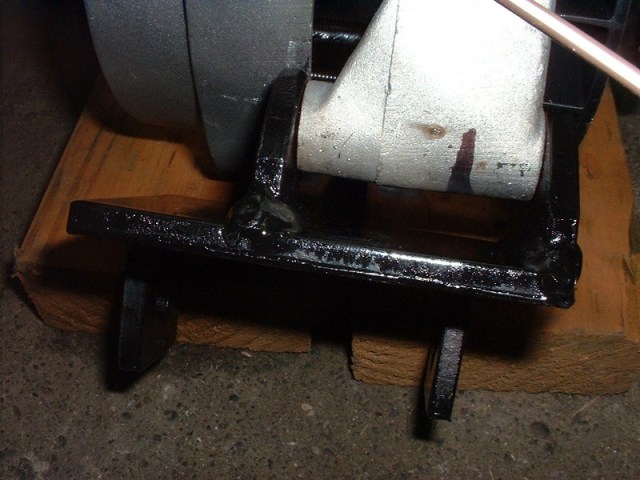
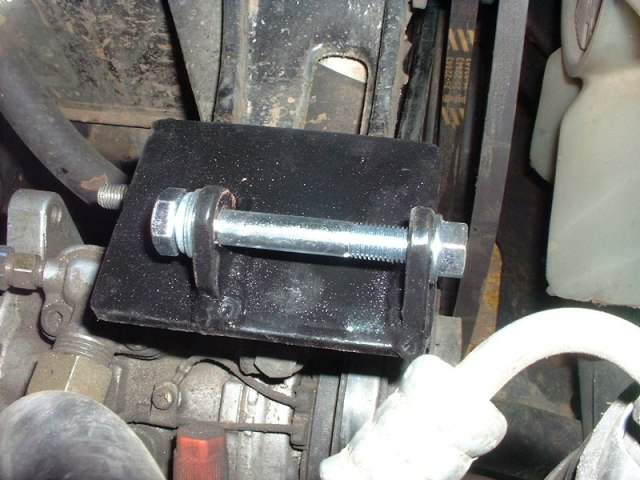
Here is the finished product.

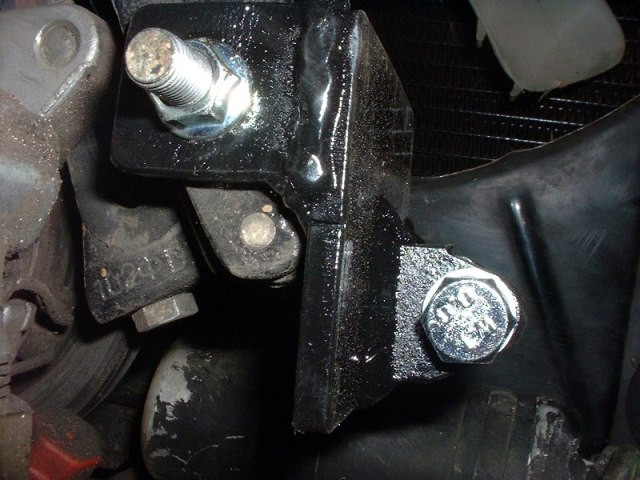
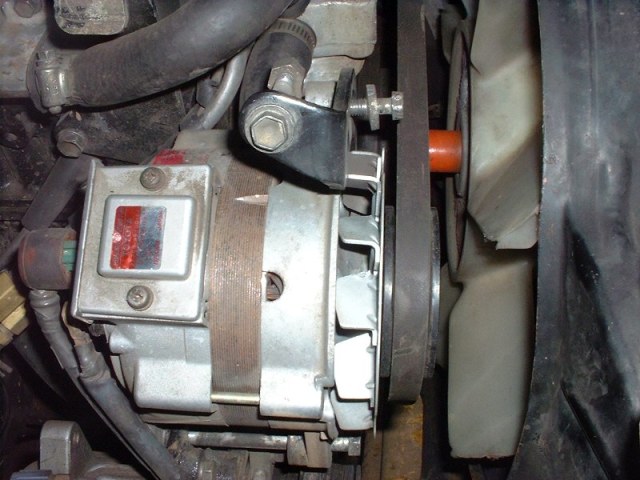
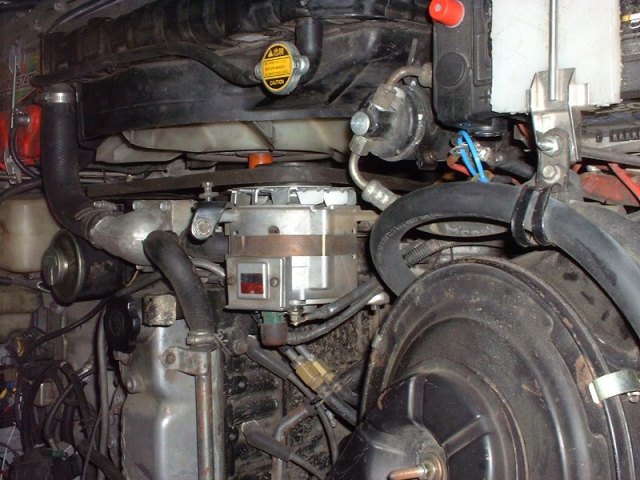
Idler pulley out of an ’86 Nissan 300 ZX. I think the same/similar pulley is used on Toyota pickups with A/C (I think at Schuck’s it is Factory Air #45902). It fits perfectly in place of the smog pump and uses the original belt and all the mounting hardware. Adjusts just like the smog pump did.

I used the solid round stock for the pulley stand off, drilled and tapped for the pulley mounting bolt. The round stock was also used for the adjuster tightening bolt and the bottom of the bracker. Again drilled and tapped as needed.

smgpmp02.JPG (172833 bytes)
smgpmp03.JPG (171026 bytes)
smgpmp06.JPG (146045 bytes)
smgpmp05.JPG (93370 bytes)

Here was the original plan. I deviated a little in the final version. A larger diameter pulley would be ideal and I had to adjust the angle of the top of the bracket to take up the slack from using a smaller pulley.

idler bracket 1.jpg (63659 bytes)
idler bracket 2.jpg (69884 bytes)
Categories
Tech

Man-a-Fre header install

I recently installed a set of headers from Man-A-Fre. They are nicely finished. I also chose to use their y-pipe so I didn’t have to get it to a shop to finish the project. I also installed the their fluid heat riser, even though the climate here is mostly mild.

header01.JPG (151228 bytes) Fluid heat riser on bottom of intake manifold

header03.JPG (139796 bytes) Fitted on the bench

header11.JPG (143644 bytes)
header21.JPG (158961 bytes)
header22.JPG (154583 bytes)

My only criticism was the incorrect bolts to connect to the y-pipe. I had to go get some sorter, larger diameter bolts to finish the project.

Categories
Tech

Dual Battery install

I have been wanting to add a dual batter setup for some time. Not for winching (at this time) but for accessories. I recently added a battery management device to my trailer, and thought it would be a good way of managing my dual battery setup too. For the battery location, I decided to find a second tray to put in the factory location. I found it at Stainlesstrays.com. For the price of a new tray for the drivers side from some places, I was able to get two new stainless steel trays. The original one was looking a little worse for ware.

The new and the old side-by-side

battray2002_0808AB.JPG (184883 bytes)
battray2002_0808AC.JPG (200010 bytes)

Here are the pictures of the new trays installed.

battray2002_0808AD.JPG (153847 bytes)
battray2002_0808AF.JPG (162654 bytes)

I don’t have the second battery or management device yet, so I haven’t figured out were I want to put the radiator overflow tank.

battray2002_0808AG.JPG (132723 bytes)


Battray2002_1121AA.JPG (122889 bytes)

Battery management device

Battray2002_1121AC.JPG (143023 bytes)
Battray2002_1121AD.JPG (146349 bytes)

Relocated coolant reservoir

Battray2002_1121AE.JPG (123965 bytes)

Categories
Tech

Alternator Upgrade – CS 144

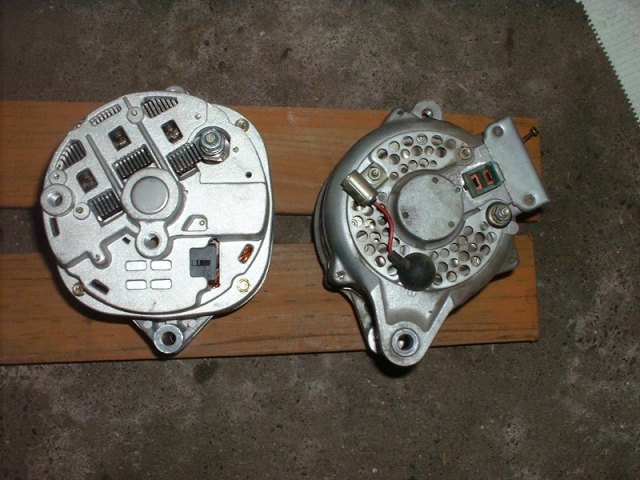
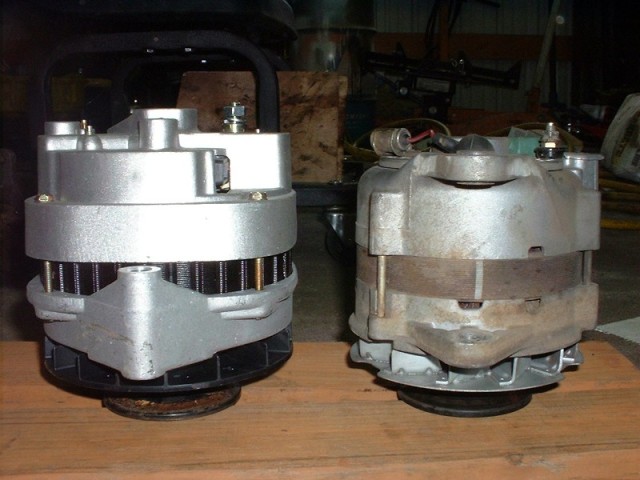
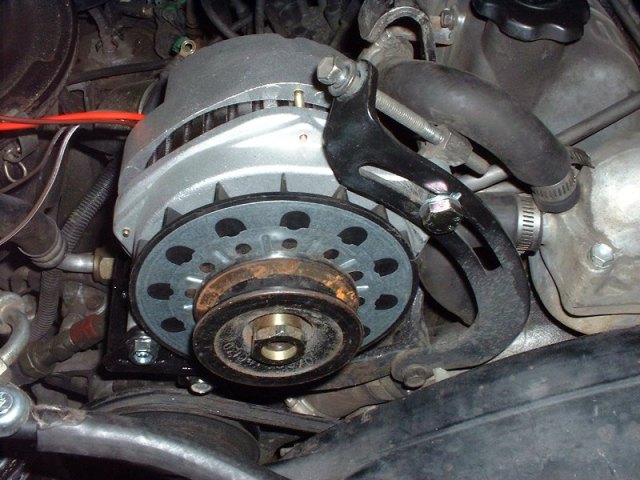
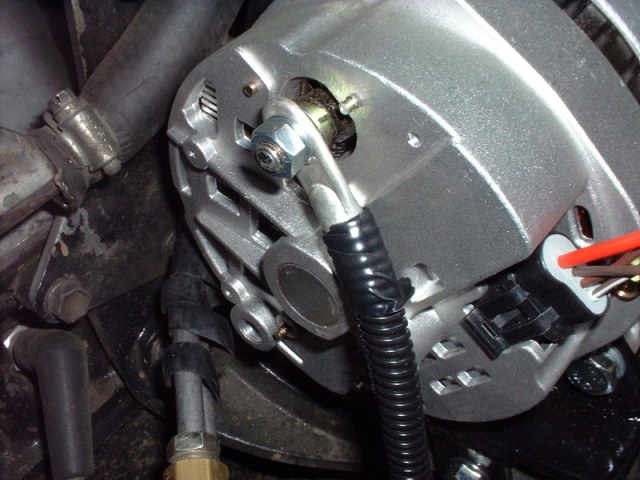
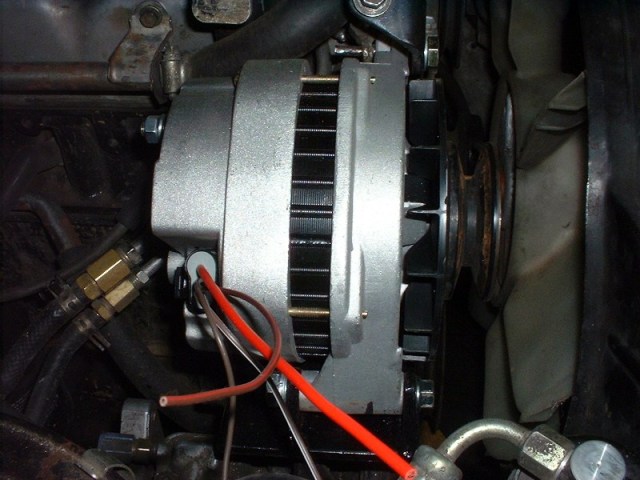
Since the addition of my TBI, Halogen lights, GPS, CB and other assorted accessories, I worried about the ability of my stock alternator to keep up with the demand. After doing much reading and searching on MUD I decided the Delco Remy CS 144 (big brother to the cs 130 but wired/mounted the same way) would fit the bill perfectly. I purchased it from Alternator Parts. It is available in the 12 o’clock/6 o’clock mounting style, just like the Denso. It also has a 17mm shaft, so the stock pulley fits right on too (but you have to use the nut that came with the alternator). I also chose to use the 5 wire alternator rather than the 1 wire because I wanted my “charge” lamp to work. I also read that the 1 wire alternator doesn’t sense the system voltage the same was and can take higher RPMs to activate the field and start producing electricity. I opted for the 140 amp version but was told it would actually produce closer to 175 amps. Here are a few pictures of the difference between the two alternators.
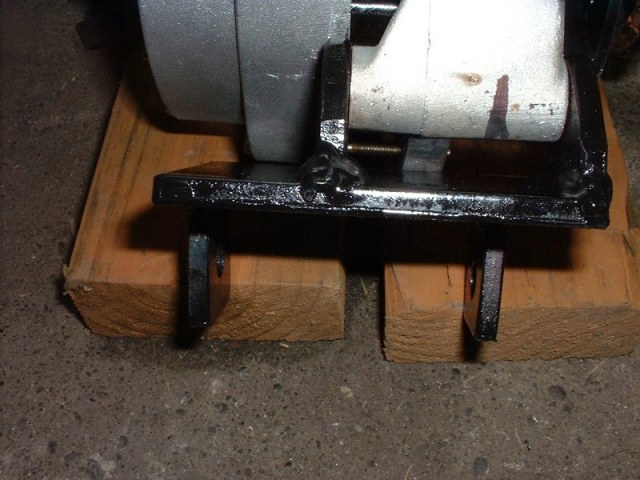
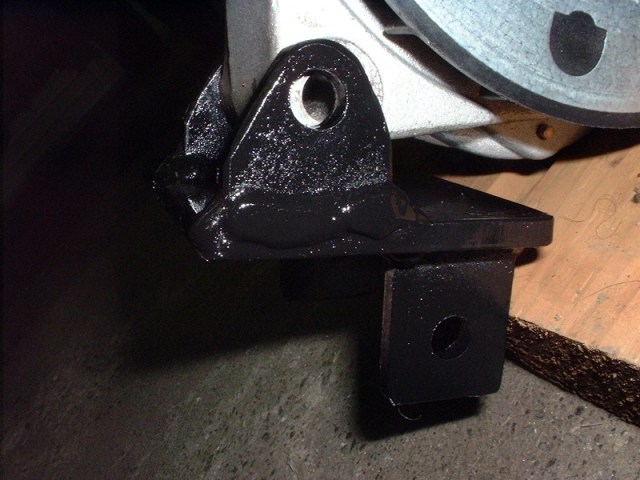
The bracket was made from a piece of 3″ x 1/4″ flat stock. I just measured from the front of the pulley on both alternators, relative to their mounts and welded tabs to a 4″ long piece of the flat stock.
I was able to use the stock adjuster by turning down the end of a bolt, just like the factory one. The cs 144 uses a larger bolt on the adjusting end.
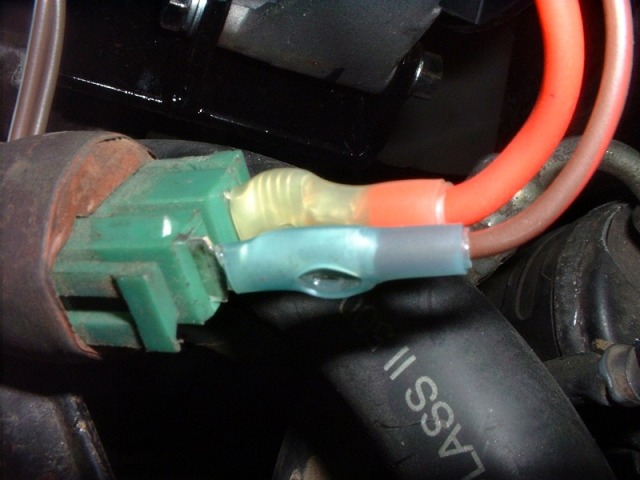
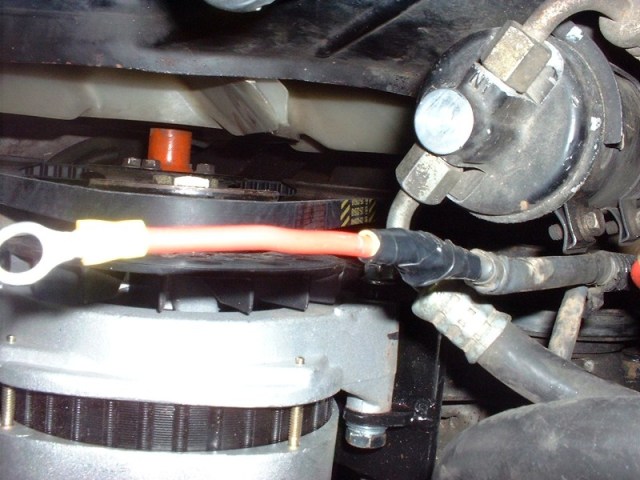
Last thing was to find a belt that would fit. I fount a slightly longer one at Napa (25-22648). Wiring was not that dificult. I used a 4 ga battery cable from the alternator to the pos post of the battery to help carry the new found amperage. I only needed two of the four wires on the cs 144 pigtail harness. The large red wire is the “S” terminal and can either be connected to the “B” post on the alternator or to the “IG” terminal on the stock wiring harness connector. The “L” terminal on the cs 144 goes to the “L” position on the stock harness connector and is for the charge light. Lastly, don’t forget to hook the wires on the wring terminal formaly connected to the “B” post of the factory alternator to either the battery pos post or the “B” post on the back of the new alternator. I connected it to the battery.
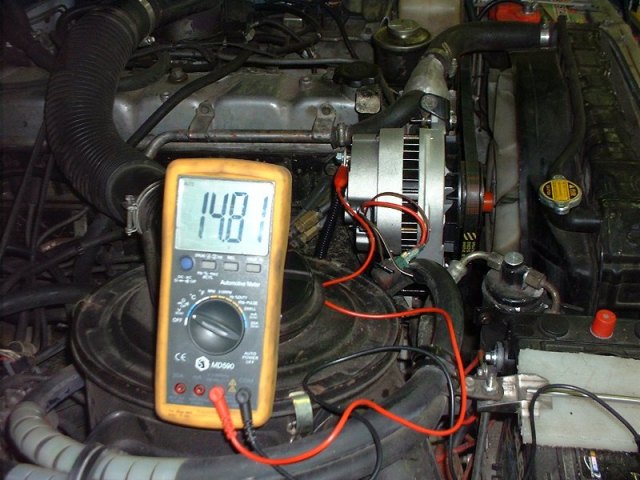
Finaly a before and after comparison. I forgot to record the before alternator output, but after is pretty good at 14.8 volts at idle.